This month, MommyHiker.com welcomes Linda McGurk from Rain or Shine Mamma to our Guest Blogger Series! Linda’s blog is a wealth of information for all thing play and she has put together a beautiful and comprehensive article to help us all revamp our kid’s outdoor playspace!
The idea of creating an outdoor playspace for your child may seem contradictory at first. After all, don’t we send our kids outside so that they enjoy simple pleasures like climbing trees, chasing after butterflies and using their creativity to think up their own games in nature, not to have some designated play area designed by adults? True. Kids today certainly don’t need another structured activity or pre-fabricated toy added to their already over-scheduled lives and crammed toy arsenals.
That’s the beauty of a natural playspace. It does NOT mean you need to go and buy a $2,000 play set with double swings, a 15-foot slide, gym rings, monkey bars and a climbing wall. And it does NOT mean that you have to build a state-of-the-art play house or have a professional landscape architect create the ultimate, kid-friendly backyard. Don’t get me wrong – those things would be nice to have, but that’s not the point of an outdoor playspace.
Outdoor playspaces can be created inexpensively, and in some cases completely free, by using natural, existing, recycled and repurposed materials. Essentially, it can be anything you and your kids want it to be. In a backyard in the city, a small garden or a mud kitchen (more about those later) might be a good way to encourage outdoor play. If you live in the country and have more space, the sky is really the limit when it comes to creating playspaces outside. But don’t get overzealous with the design – the most important thing is to let your kids take an active part in the process and shape the space in a way that invites to play. Done well, it will entice imaginative and open-ended games that will captivate your kids for hours on end. Here are seven features that your kids will want you to include:
DIRT AND SAND
We recently had some construction done and ended up with two big piles of top soil in the backyard, and, unsurprisingly, my girls have found at least a dozen different ways of entertaining themselves with the dirt: Rolling down from the top, doing somersaults (forward and backward), digging, diving, mixing it with water, pretending to rescue each other using ropes…well, you get the idea. If having a pile of dirt in the yard is not part of your landscaping plan, a mud kitchen might be a good alternative. A mud kitchen can be made simply by putting a 2×10 over a couple of tree stumps and giving your kids some old pots and pans to place on it or, if you happen to be handy, as elaborate as you want to make it. For more detailed instructions, check out outdoor play guru Jan White’s ideas here.
 |
| Got Dirt? |
WATER
There’s something about water that naturally attracts children. They love to scoop it up, pour it, splash it, jump in it, float things in it, mix it with dirt, spray it, race things in it and – inevitably – get wet. And you don’t need a creek in your backyard to take advantage of the great play potential of water. A couple of buckets, some empty milk jugs and yogurt containers combined with natural objects like tree nuts, sticks, leaves and other things that may or may not float are a great way for your kids to start having fun with water. And if you’re feeling creative, check out this Pinterest board on how to make a water wall.
CHALLENGES
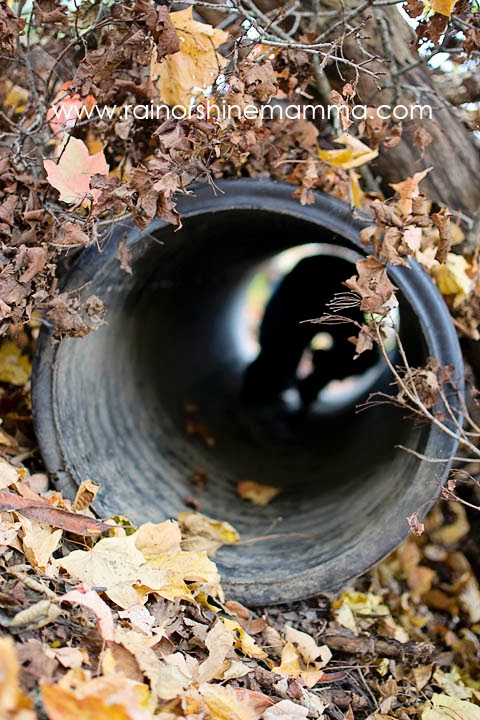
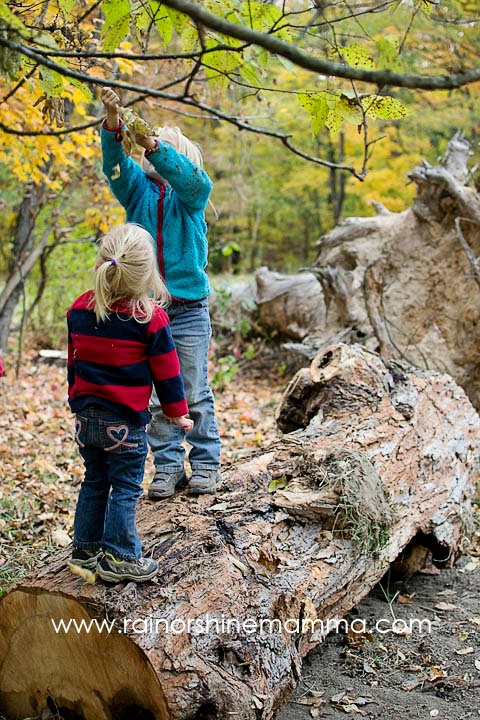
According to Play for All Guidelines, “without taking risks, children cannot learn to their full potential.” By all means, that doesn’t mean that the playspace should be hazardous, just that it should incorporate different levels of challenges to keep your child’s interest. A tree to climb, plants to jump over, a log to balance on, stepping stones to hop on, and tunnels to crawl through are some playspace features that will keep your child challenged. We just made a tunnel from a leftover culvert and can report that it is getting used heavily.
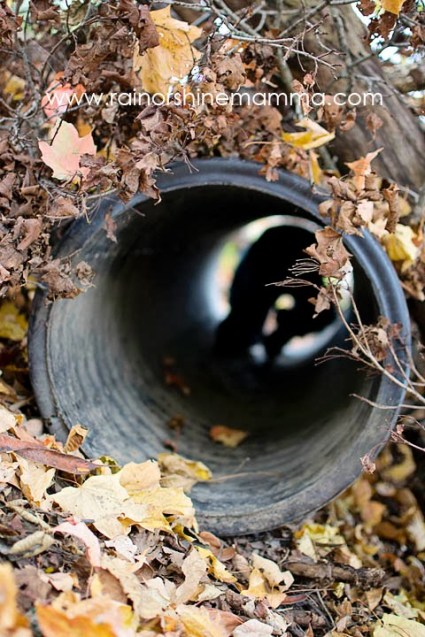 |
| Tunnels! |
ANIMALS
Children are instinctively fascinated by bugs, birds and other critters, and regardless of where you live there are ways of attracting them to a playscape. Combine dirt, rocks, pine cones and some old log pieces in a designated area, then wait and see who moves in! The kids will love crawling around in the dirt and lifting the rocks to see what’s hiding underneath. If you want to go all out, check out these amazing bug hotel designs from Inspiration Green. To attract birds, help your kids make a simple birdfeeder – Spoonful has several ideas.
LOOSE PARTS
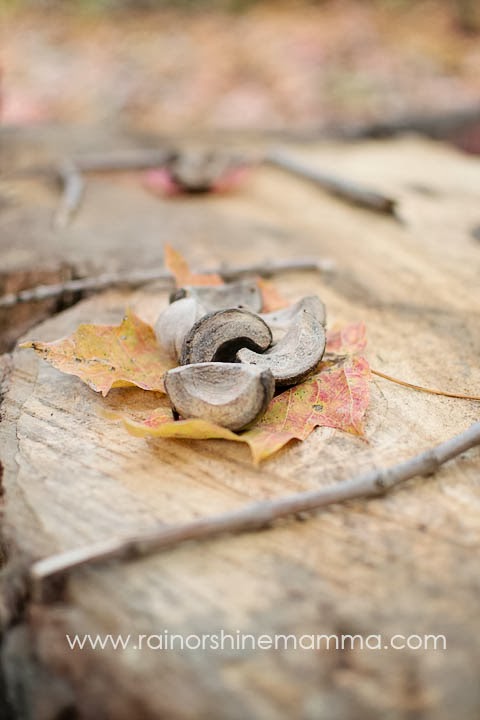
Loose parts are exactly that: materials that can be moved around, changed and redesigned to create new games and keep the children’s creative juices flowing. In an outdoor playscape loose objects could consist of rocks, wooden blocks, tree nuts, sticks, leaves or other objects that your kids like and are readily available where you live. Loose parts can also be used to count and categorize different items. The more materials that are available, the more opportunities for engaging play and no risk of boredom!
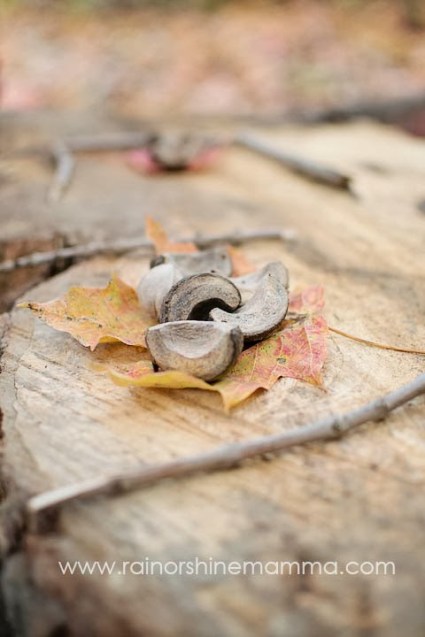 |
| Pieces and Parts! |
SENSORY STIMULATION
I think the best way for kids to experience the outdoors is with all five senses. Using a wide range of materials, colors and textures in the outdoor playscape will help stimulate touch and sight. Add flowers and herbs to bring in different smells: for example chamomile, lavender, sage, bulbs, thyme, and native flowers, and plant them in creative places, like a hollow stump. For taste, plant some berry bushes and fruit trees – foraging edible fruits and berries makes for unforgettable childhood memories. For hearing, try creating an outdoor music station; Let the Children Play has some cheap DIY ideas.
 |
| Nature’s Senses! |
NOOKS AND CRANNIES
Kids love nooks and crannies where they can hide and make their own secret places, as well as different levels with views. Boulders and logs are great for this purpose, and so is vegetation. Use plants that are native, fast-growing and low-maintenance – bushes and tall grasses planted in clusters will become hideouts or places to gather in. Sunflowers work well too, since they’re both cheap and versatile. The Green Education Foundation has good instructions for how to plant a sunflower house.
 |
| Climb! |
___________________________________________
About the Author
Swedish-born writer, photographer and mother-of-two Linda McGurk believes that the best childhood memories are created outside, while jumping in puddles, digging in dirt, catching frogs and climbing trees. She blogs about restoring the connection between children and nature at Rain or Shine Mamma, and hopes to inspire other parents to get outside with their children every day, regardless of the weather.




 Mommy Hiker