[Gear Review] The LifeStraw® by Vestergaard + Giveaway

Next year, our family’s number one bucket list item is a family backpacking trip. We had a backpacking trip planned this past May, but for various reasons, we had to put it off. I think it was for the best considering we are still doing research and budgeting to buy the essentials that we’ll need like a smaller backpacking tent and more compact sleeping bags and mats.
One must-have on any backpacking trip is water. You can never have enough of it, especially with little ones embarking on long hikes, but water is heavy! Water bladders can contribute to over half of the weight you have to carry for a family of three to stay hydrated and let’s face it, the more you can lighten your load, the better! That’s why when Vestergaard contacted me requesting a review of their product, The LifeStraw® I jumped at it!
We have researched tons of filtration systems. We took into consideration that we almost always prefer treks, hikes and camps that are on some sort of waterway and that is why The LifeStraw® seemed like the best choice for our needs!
But, there’s another, more important reason why I love this product so much, it’s Vestergaard’s global humanitarian efforts. Each consumer purchase of LifeStraw® products provides one school child in Africa with clean water for an entire school year. Let me repeat that: EACH consumer purchase of LifeStraw® products provides one school child in Africa with clean water for an ENTIRE school YEAR. WOW! If there were more companies out there doing what Vestergaard is doing, the world would indeed be a better place!
LifeStraw® is an award-winning point-of-use portable water filter that transforms microbiologically contaminated water into safe, clean drinking water. It is ideal for a variety of users outside of the home, from hikers and campers to people displaced by natural disasters.  
Features and Specs
  • Retail Price $19.95
  • Lightweight–only 56 grams (or 2 ounces) 
  • Uses hollow fibre microfiltration technology 
  • Purifies a minimum of 1000 litres (264 gallons) of water 
  • Removes virtually all bacteria (99.9999 percent) and protozoan parasites (99.9 percent) that can contaminate water, including giardia 
  • Reduces turbidity (muddiness) by filtering particulate matter larger than 0.2 microns 
  • Made of durable plastic  
  • Chemical-free 
  • Doesn’t require electrical power, batteries or replacement parts–it’s powered by user-generated suction

How It Works

LifeStraw® uses advanced hollow fiber technology. This is a highly efficient method of filtration. Hollow fiber membrane requires no chemicals like chlorine or iodine.  
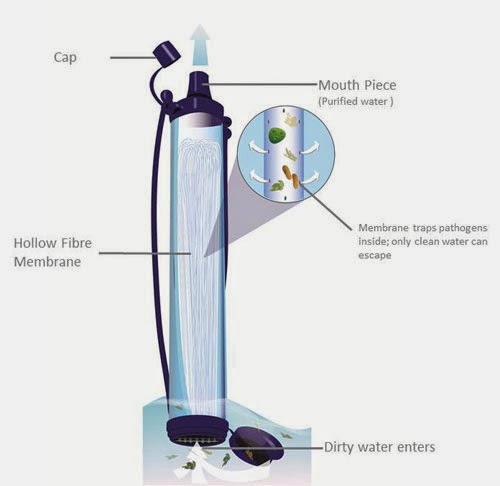
  1. Water enters and is forced through narrow fibers under high pressure. 
  2. Hollow fibers trap bacteria, protozoa, and other contaminants which are flushed out by backwashing. 
  3. Clean water exits through tiny pores in the walls of the hollow fibers. 
  4. Filtered water is safe to drink. 
Easy to Use  
Anyone who can use a drinking straw can use a LifeStraw®. Simply draw the unfiltered water through the LifeStraw®, blow air back through the straw to flush and clear it after drinking.

The LifeStraw® product and information have been provided by Vestergaard.

And now *drum roll* without further ado, here’s the giveaway! Enter below to win your very own LifeStraw®! Contiguous US Residents only please! Good luck!! 

a Rafflecopter giveaway//widget.rafflecopter.com/load.js

Discovering the Hidden Trails of Trippet Ranch – Hiking Topanga State Park

Topanga State Park spans 11,000 acres with 36 miles of trails that wind through a wide variety of terrain, from canyons and cliffs to hills and meadows and some of the most spectacular views of the Pacific Ocean Los Angeles hiking has to offer. It also features tons of cool geologic formations meticulously designed by volcanic activity, millions of years in the making. If you’re an astutely observant explorer you can find a bevy of marine fossils and, if you’re up for the challenge, yes, even those elusive and shifty earthquake faults.

With over 60 different trail entrances, it can be quite overwhelming just to pick a spot to start, but my suggestion would be to enter the park’s main entrance at 20825 Entrada Road, Topanga, Ca 90290. There is a $10 fee to park in this lot, which I have no problem paying considering the desperate financial trouble our state parks are in right now, but you can generally find free parking on the numerous side streets, if you want to add a bit more mileage on to your day’s hike.

Topanga State Park is plucked right from the front of the most stunning postcard you’ve ever seen. All you have to do is walk 20 steps from the parking lot and you’re standing in the middle of a scene straight out of a Tim Burton film, surrounded by the crooked, twisted, welcoming arms of hundreds of ancient live oaks.

Under the shade of this live oak grove, there are many picnic tables and clean bathrooms, making it the perfect place to lounge, play hide and seek, read a book, meditate or have lunch. Walk a few more steps past the picnic area, to the head of the Trippet Ranch Trail and it’s as if you’ve walked smack dab in to a living, breathing Monet. We saw four artists masterfully painting this portion of the trail which conjured up memories of traveling through the french countryside. All that was missing was the Jambon-Beurre on a crispy baguette.

As you make your way up the curved incline you will come to a fork in the trail. To continue on to Eagle Rock, bear left.

This portion of the hike guides you along well-maintained trails through rough chaparral, oak forests and sprawling grasslands. Being a mixed-use trail, you’ll encounter hikers, bikers and even the occasional meandering horse, so watch out for their little presents along the trail!

One of my favorite things about the Trippet Ranch Trail up to Eagle Rock, other than the fact that it’s kid-friendly, are the numerous secondary trails which pop up out of nowhere, allowing extra opportunities for exploration and discovery. None of the informal trails we took actually led anywhere in particular, but when hiking, we’re never in a real rush to get to any place specific anyway. On one of the secret little side-trails, we found a perfect spot for lunch, though, then continued on our wandering way.

As is the norm when hiking with kids, we never did make it all the way up to craggy, panoramic views of Eagle Rock, but we surely found our destination as we arrived back to our car, three hours later, with our imaginations well-used, a nature-calmed mind and de-stressed muscles.

Family Adventure Travel: Finding Hiking Serenity at Point Lobos Nature Reserve

As we entered Point Lobos State Nature Reserve my 3 year old daughter and I were greeted with canopy of lichen-draped pine trees and rare and endangered Monterey Cypress, the shocking call of a red-tailed hawk soaring high above and the far-off boom of the crashing waves. We knew, right then and there, deep down in our bones, that this was going to be a day we wouldn’t soon forget.

With over fourteen square miles of breathtakingly beautiful topography where the rocky central California coast meets the tremendous Pacific Ocean, Point Lobos State Nature Reserve was coined the crown jewel of the California State Park System. Its dramatic and sweeping views offer a perfect spot for sea otter and elephant seal watching and if you happen to be so lucky, you might even catch a glimpse of the mighty grey whales as they make the long journey from their feeding grounds in northernmost Alaska all the way down to their sacred breeding grounds at the tip of the Baja Peninsula.

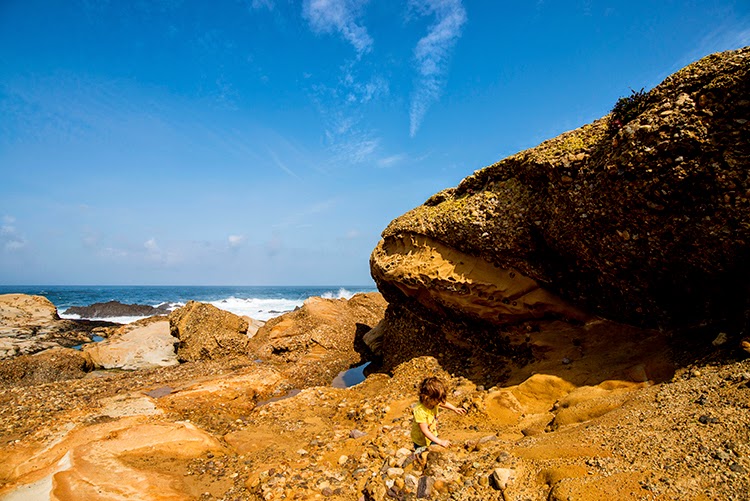
The first part of our day took us to Sea Lion Point and Carmelo Formation, a rock formation estimated to be a whopping 60 million years old! The sea lions did not disappoint, their joyful barking deepening our connection to the land even more. The jutting rocks lay in waiting and V scrambled her way up, down, over and under every single nook and cranny accessible to her, fervently observing and discussing the differences between the various rock formations, colors and textures. So many questions, so much to discover, so much to learn.

As we waved adieu to the starfish and the sea lions, we headed back around Headland Cove where we stopped to watch sea otters playing in the kelp before making our way past the coastal prairie scrub of the Old Veterans Trail and finally arriving at the Cypress Grove trail head.

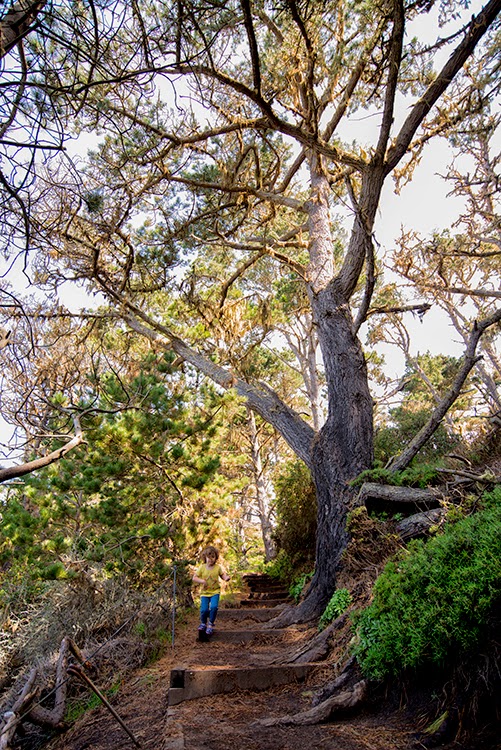
Hiking amidst some of the most majestic and magnificent trees, which included California Live Oaks as well as the endangered Monterey Cypress, we were reminded just how unique and meaningful an experience this was, given that the grove we were soaking in is only one of two naturally growing Monterey Cypress stands on Earth. What an honor. I felt so blessed to have the opportunity to show my daughter this pristine and important part of our ecosystem.

The California State Parks’s staff does a stellar job of maintaining the trail, in conjunction with the Point Lobos Foundation who provides its visitors with extremely educational and glowing experiences. Their corps of volunteer docents are helpful, knowledgeable and so obviously in love with what they do, fueling a passion for future generations of stewards of this beautiful land, giving them the tools they will need to protect and provide for our Mother Nature.