Book Review: Wild by Cheryl Strayed – A Transformative Journey from Broken to Better

Book Review: Wild: From Lost to Found on The Pacific Crest Trail by Cheryl Strayed

Wild
From Lost to Found 
on The Pacific Crest Trail

by Cheryl Strayed
315 p, Alfred A. Knopf, $25.95

Cheryl Strayed’s calamitous memoir of her 1,180 mile journey along the spectacular and harrowing Pacific Crest Trail can only be described as life-changing. Shifting between her tumultuous past and agonizing present, I found myself shifting as well from astonished to uplifted and back again, riveted by her monumental naiveté and an unforgettable drive to go somewhere. Somewhere different. Anywhere. Just not where she had already been, Hell.
Haunted by the death of her mother, full of guilt for the destruction of her marriage and then her subsequent spiral into drugs, Cheryl realized that she had to get out of the daily traps keeping her from moving forward in to a life of purpose and meaning. At 26, she stepped on to the Pacific Crest Trail in a dusty Mojave Desert town in Southern California, in search of answers. Then, the realization hit her, like an avalanche; she had absolutely no idea what she had gotten herself into. Not an avid hiker by any sense of the word, she quickly learned the PCT was serious business and being ill-prepared would not just cost her a few toenails, but could potentially be the death of her. Luckily, it wasn’t a death as much as it was her rebirth.
Through her vibrant and spirited words, I could hear the crunch of the leaves under her ill-fitting boots. I could smell the musky pine trees, see the creek as it meandered through the forest, feel her agony and fully grasp the depth of her grief. Her ability to describe stillness, quiet and seemingly inane moments, allowed me to sit with her in meditation, to ponder along with her my own deepest innermost thoughts. “I gazed out over the darkening land. There were so many amazing things in this world. They opened up inside me like a river. I laughed with the joy of it, and the next minute I was crying my first tears on the PCT. I cried and I cried and I cried. I wasn’t crying because I was happy. I wasn’t crying because I was sad. I wasn’t crying because of my mother or my father or Paul. I was crying because I was full.”
The unnecessarily heavy load she carried with her on her journey was a brilliant metaphor for the needless, deafening load of criticism, self doubt and misery she had been carrying for years. As if the physical load wasn’t enough, the behemoth backpack began wearing through her clothes, cutting into her skin, causing gaping open wounds that poetically lead straight to her soul. Bound by bloody bandages, she continued, begrudgingly forced to care for her self-inflicted wounds, finally conceding that they must heal and in turn, so must she.

To read the entire Review of Cheryl Strayed’s book Wild, visit ChasquiMom.com and check out my Guest Post!

[Family Volunteering Series Pt. 3] Ballona Wetlands Restoration Project

Only 10% of California’s wetlands still exist today and Ballona is the last remaining coastal salt marsh in Los Angeles County. As we sat on its serene bank listening to the call of endangered terns and the buzzing of native bees, I couldn’t help but feel saddened by its destruction and uplifted by the hands of more than 75,000 volunteers working diligently for more than 35 years to protect and restore its precious ecosystem.

Family Volunteering at Ballona Wetlands
Finding solitude at the Ballona Wetlands

The Friends of Ballona Wetlands has an award-winning volunteer restoration program geared towards hands-on restoration that is perfectly suited for families who are looking to get outdoors and get dirty! Similar to our TreePeople experience, we headed out early on a Saturday morning, lunches packed, sun block applied, ready to roll up our sleeves and dig into some dirt!
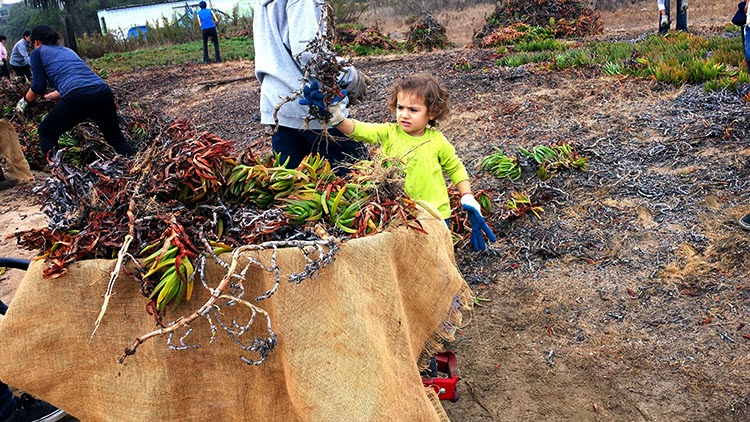
Ballona boasts an almost 600 acre protected ecological reserve nestled smack dab in the middle of urban sprawl and is home to about 300 bird species and hundreds of species of plants. Unfortunately, large swathes of its delicate landscape have been overrun by invasive, non-native plants such as the South American Pampa Grass and Australian Ice Plant. 

Family Volunteering at Ballona Wetlands
Removing Australian Ice Plants

A primary focus of the restoration project is removal of these non-native plants and in the last 8 years over eight thousand four hundred cubic yards of invasive plants, trash and debris have been successfully cleared by the caring hands of the LA community. Meanwhile, volunteers work diligently to plant native vegetation back into the wetlands’ rare and expansive network of dunes, highlands and estuaries.

Family Volunteering at Ballona Wetlands
Hiking and Bird-Watching on the Ballona Creek Trail
This program also offers its volunteers a rich and vibrant educational experience complete with docents and printed material to help us to understand the importance of supporting community environmental stewardship within these unique wetlands. 

Family Volunteering at Ballona Wetlands
Using provided educational materials as a guide

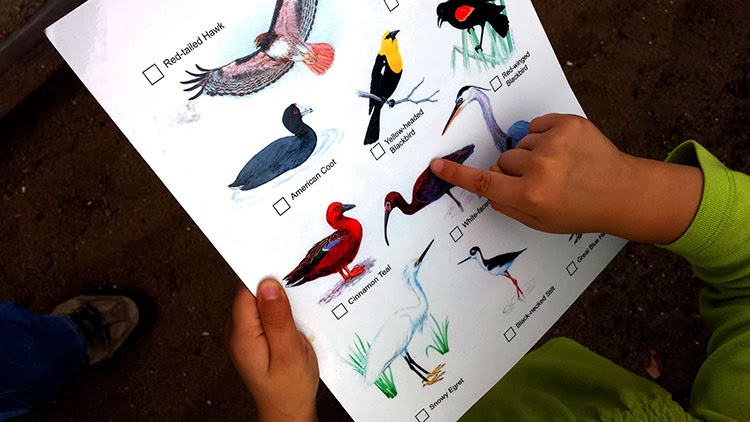
V thoroughly enjoyed referring to the diagram of commonly-spotted ducks and birds who nest in the marsh. As we hiked along the ridge we were able to revel in the elegant flight of a red-tailed hawk and discover what distinguishes the Great Blue Heron from a Snowy Egret. What a treat!
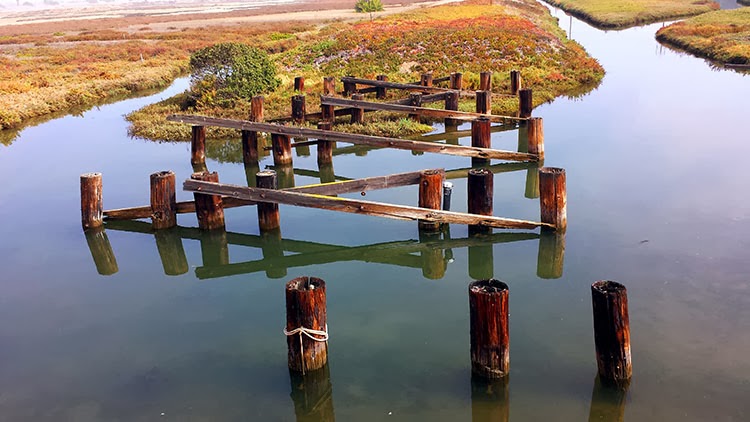
The importance of restoring and maintaining Ballona is far-reaching and guaranteed to give back to future generations ten-fold. Preserving our wetlands is vital for Earth and our well-being on so many different levels. They provide a place for migrating birds to rest and refuel as they make their long journey across thousands of miles, from the most southerly point of South America to the northernmost tundra of Alaska. Tantamount to humans, though is the undeniable significance of the wetlands’ ability to filter toxins and heavy metals through its vegetation, in turn sending cleaner water back into Los Angeles’ aquifers and rivers.

Family Volunteering at Ballona Wetlands
Serenity at the Ballona Wetlands

For our family, learning the seriousness of our effects on the environment and taking responsibility for the destruction, caused by us, to our most fragile ecosystems by taking part in amazing programs like these can only help lead us on our quest to understanding the true importance of environmental stewardship. It allows us to give thanks and reminds us what is most valuable in our lives; each other and the natural world that envelops and supports us.